Do You Still Need a Local Sponsor in Dubai in 2026? Mainland vs Free Zone Rules Explained
Table of Contents
- Do You Still Need a Local Sponsor in Dubai in 2026?
- What Is a Local Sponsor in Dubai?
- Local Sponsor vs Local Service Agent: Key Difference
- Mainland Company Setup in Dubai 2026: Do You Need a Local Sponsor?
- Free Zone Company Setup in Dubai 2026: Do You Need a Local Sponsor?
- Mainland vs Free Zone Rules in Dubai: Ownership Comparison
- When Can Foreign Investors Own 100% of a Dubai Mainland Company?
- When Might a UAE National Still Be Required?
- Mainland vs Free Zone: Which Option Is Better in 2026?
- Common Mistakes Investors Make About Local Sponsorship
- How ANUVI Business Solutions Can Help
- FAQs
Do You Still Need a Local Sponsor in Dubai in 2026?
One of the most common questions foreign investors ask before starting a business in the UAE is: “Do I still need a local sponsor in Dubai in 2026?”
The simple answer is: in most cases, no.
Dubai has significantly changed its company ownership rules over the last few years. Today, many mainland business activities allow 100% foreign ownership, meaning foreign investors can own their Dubai mainland company without giving 51% shares to a UAE national sponsor. The UAE Ministry of Economy confirms that investors of all nationalities can establish and fully own companies in the UAE following the Commercial Companies Law reforms. (Ministry of Economy)
However, this does not mean the local sponsor concept has completely disappeared. Certain regulated, strategic, professional, or special approval activities may still require a UAE national partner, local service agent, or specific government approval depending on the activity and legal structure.
This guide explains the local sponsor rules in Dubai in 2026, the difference between mainland and free zone ownership, and how to choose the right setup for your business.
What Is a Local Sponsor in Dubai?
A local sponsor in Dubai traditionally referred to a UAE national or UAE-owned entity that held 51% ownership in a mainland Limited Liability Company, while the foreign investor held 49%.
Before the UAE’s foreign ownership reforms, many mainland companies required a UAE national sponsor to meet legal ownership requirements. This structure was commonly used for trading, commercial, and industrial licenses.
In practical terms, the local sponsor’s role could include:
- Holding shares as per the legal structure
- Signing certain government documents
- Supporting license issuance or renewal
- Acting as a UAE national partner for mainland licensing purposes
But in 2026, this old model is no longer required for many activities because Dubai mainland now permits full foreign ownership for most approved business activities. Invest in Dubai also states that most mainland business activities now allow full foreign ownership. (Invest in Dubai)
Local Sponsor vs Local Service Agent: Key Difference
Many investors confuse a local sponsor with a local service agent. This is a dangerous mistake because both are different.
A local sponsor is usually connected with ownership. Historically, the UAE national sponsor held 51% shares in certain mainland companies.
A local service agent, on the other hand, does not own shares in the company. The agent may only assist with government liaison or administrative representation for certain professional or branch structures, depending on the activity and authority requirement.
Here is the simplified difference:
| Point |
Local Sponsor |
Local Service Agent |
| Ownership role |
May hold shares, depending on structure |
No ownership |
| Profit share |
Depends on agreement |
No profit share |
| Common use |
Certain mainland commercial structures |
Certain professional licenses or branches |
| Required in 2026? |
Only for limited/restricted cases |
May apply in specific structures or activities |
The key point is this: 100% ownership does not always mean zero UAE-side compliance requirement. Some activities may still require external approvals, a local service agent, or a specific legal form.
Mainland Company Setup in Dubai 2026: Do You Need a Local Sponsor?
For most business activities, you do not need a local sponsor for a Dubai mainland company in 2026.
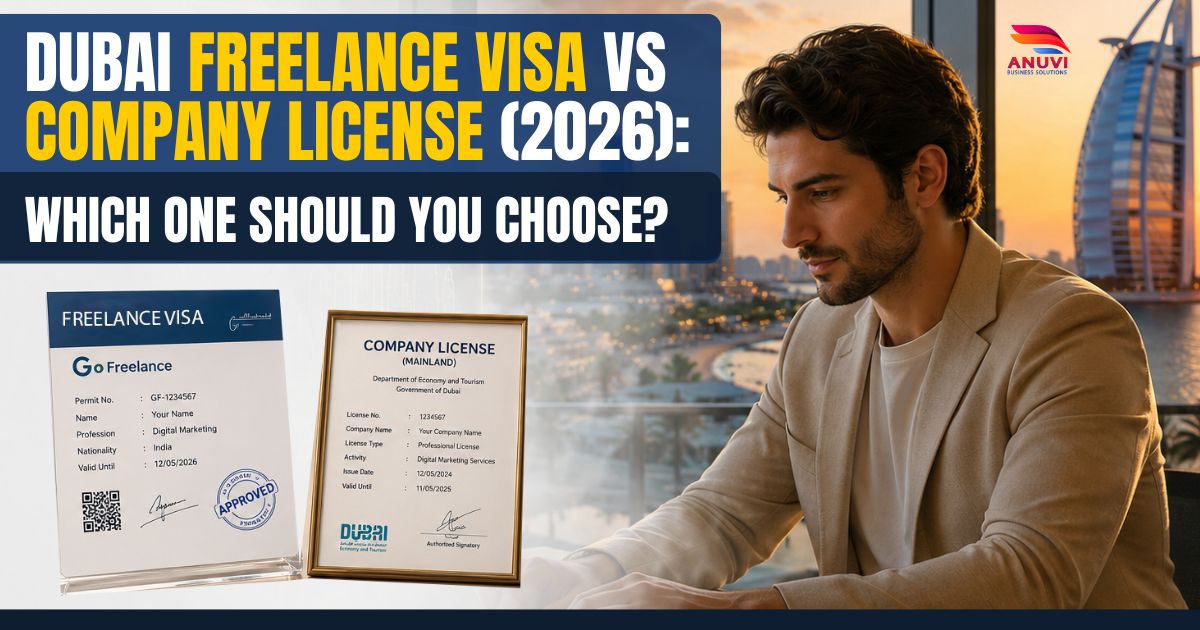
Dubai mainland companies are licensed by the Department of Economy and Tourism, commonly known as DET. A mainland license allows a business to operate across Dubai, the wider UAE market, and internationally. Mainland companies are often preferred by businesses that want direct access to the UAE market, government contracts, retail spaces, offices, warehouses, and local clients.
Under current UAE company ownership reforms, many mainland activities now allow 100% foreign ownership. This gives investors stronger control over their business, bank account, profits, operations, and management decisions.
A Dubai mainland company is usually suitable for:
- Trading companies
- Consultancy firms
- Real estate-related activities
- Technical services
- Restaurants and cafés
- Construction-related services
- General maintenance
- Corporate service providers
- Tourism-related companies
- Import and export businesses
But the exact ownership eligibility depends on the business activity, legal structure, and licensing authority approval.
Free Zone Company Setup in Dubai 2026: Do You Need a Local Sponsor?
For a Dubai free zone company, you generally do not need a local sponsor.
Free zones were originally created to attract foreign investors by offering 100% foreign ownership, simplified company formation, and business-friendly infrastructure. This means a foreign investor can usually own the entire free zone company without appointing a UAE national sponsor.
Popular UAE and Dubai free zones include:
- Meydan Free Zone
- DMCC
- IFZA
- Dubai South / DWC
- RAKEZ
- SHAMS
- DAFZA
- Dubai Silicon Oasis
- JAFZA
A free zone company is often suitable for:
- International trading
- Consultancy
- Digital services
- E-commerce
- Media and marketing
- IT services
- Holding companies
- Import/export businesses
- Remote or flexi-desk operations
However, free zone companies have limitations. A free zone license does not automatically allow unrestricted direct trading in the UAE mainland market. If the company wants to sell directly to mainland clients, open a physical shop outside the free zone, or execute certain local contracts, it may need additional approvals, a distributor, a mainland branch, or a separate mainland license.
So the free zone advantage is clear ownership and cost efficiency, but the mainland advantage is stronger local market access.
Mainland vs Free Zone Rules in Dubai: Ownership Comparison
| Feature |
Dubai Mainland Company |
Dubai Free Zone Company |
| Local sponsor required? |
Usually not for most activities in 2026 |
No |
| Foreign ownership |
100% allowed for most approved activities |
100% foreign ownership generally allowed |
| Licensing authority |
DET / relevant mainland authority |
Specific free zone authority |
| UAE market access |
Can operate directly in UAE mainland |
Limited direct mainland access unless structured properly |
| Office requirement |
Ejari/office may be required depending on activity |
Flexi-desk, shared office, or physical office options |
| Government contracts |
Better suited |
Usually limited unless structured with mainland presence |
| Visa quota |
Depends on office size/activity |
Depends on package and facility |
| Best for |
UAE-focused business operations |
International, online, consulting, and cost-sensitive setups |
When Can Foreign Investors Own 100% of a Dubai Mainland Company?
Foreign investors can own 100% of a Dubai mainland company when the chosen business activity is approved for full foreign ownership.
This is now common for many commercial, industrial, and professional activities. The UAE Government has confirmed that the Commercial Companies Law was amended to grant foreign investors full ownership of specific businesses. (u.ae)
Examples of activities that may often qualify include:
- General trading
- Management consultancy
- Marketing services
- IT consultancy
- Real estate brokerage, subject to RERA approval
- Technical services
- Event management
- Interior design
- Cleaning services
- Foodstuff trading
- Building material trading
- Fashion and garment trading
But do not assume. Activity names matter. One small difference in the selected activity can change ownership, approval, office, and compliance requirements.
For example, “management consultancy” and “investment consultancy” may not be treated the same. “General trading” and “specific product trading” may have different fee and approval implications. “Real estate brokerage” requires real estate authority approvals. “Fitness” or “healthcare” activities may require external approvals.
This is where many investors lose money: they choose the cheapest license package without checking whether the activity actually matches their business model.
When Might a UAE National Still Be Required?
Although local sponsor requirements have reduced significantly, a UAE national or UAE-side arrangement may still be relevant in certain cases.
This can apply where:
- The activity is on a restricted or strategic list
- The business requires special government approval
- The structure is a foreign company branch
- The activity falls under regulated sectors
- The authority requires a local service agent
- The business needs a specific mainland arrangement for local operations
- The legal form selected does not support full foreign ownership for that activity
Dubai’s Invest in Dubai platform notes that while 100% foreign ownership applies widely, some categories remain restricted. (Invest in Dubai)
Activities that may require extra review include sectors connected to:
- Security
- Defence
- Banking
- Insurance
- Telecom
- Oil and gas
- Certain healthcare activities
- Education
- Legal services
- Highly regulated professional services
The rule is not “no sponsor forever.” The accurate rule is: most activities no longer require a traditional 51% local sponsor, but restricted activities and special structures must be checked case by case.
Mainland vs Free Zone: Which Option Is Better in 2026?
There is no universal answer. The better structure depends on how the business will actually operate.
Choose a Dubai mainland company if you want to:
- Trade directly in the UAE market
- Work with mainland clients
- Open a shop, office, restaurant, salon, clinic, or warehouse
- Bid for UAE government or semi-government contracts
- Hire staff locally
- Build a long-term UAE operating presence
- Avoid limitations on mainland business activity
Choose a Dubai free zone company if you want to:
- Keep setup costs controlled
- Own 100% of your company
- Operate internationally
- Provide consultancy or digital services
- Use a flexi-desk or shared office
- Start quickly with limited visa requirements
- Run an online, remote, or export-focused business
Here is the blunt truth: do not choose free zone only because it is cheaper. If your real business model is mainland-facing, a cheap free zone license can create operational problems later with banking, invoicing, customs, contracts, visas, and client onboarding.
Similarly, do not choose mainland only because it sounds more powerful. If your business is international consultancy or online services with no UAE retail presence, a free zone may be more efficient.
Common Mistakes Investors Make About Local Sponsorship in Dubai
Mistake 1: Believing every mainland company still needs a UAE sponsor
This is outdated. Many mainland companies can now be fully foreign-owned.
Mistake 2: Thinking free zone companies can freely trade anywhere in Dubai
A free zone license gives ownership benefits, but it does not automatically give unrestricted mainland trading rights.
Mistake 3: Choosing the wrong activity to save money
The wrong activity can cause banking rejection, license amendment costs, visa issues, tax classification problems, and authority objections.
Mistake 4: Ignoring external approvals
Some activities require approvals from authorities such as RERA, Dubai Municipality, Civil Defence, KHDA, DHA, SIRA, Dubai Sports Council, or other regulators.
Mistake 5: Not checking Corporate Tax and compliance obligations
Even if your company is small, dormant, or newly formed, you must consider UAE Corporate Tax registration, accounting, bookkeeping, VAT, UBO, ESR where applicable, and license renewal compliance.
Internal Links to Read Next
To understand the full business setup process, you may also read:
How ANUVI Business Solutions Can Help
At ANUVI Business Solutions, we help investors choose the right UAE company structure based on actual business goals, not generic packages.
Our team assists with:
- Mainland company formation in Dubai
- Free zone company setup in UAE
- Business activity selection
- Trade name reservation
- Initial approval
- MOA and license documentation
- Local sponsor or local service agent guidance, where required
- Corporate Tax registration
- VAT registration and filing support
- Investor visa and employee visa processing
- Emirates ID and medical assistance
- Bank account opening coordination
- License renewal, amendment, and liquidation support
With 12 years of proven expertise and award-winning corporate excellence, ANUVI supports local and international clients with practical, compliant, and cost-effective UAE business setup solutions.
Conclusion: Do You Still Need a Local Sponsor in Dubai in 2026?
In most cases, you do not need a local sponsor in Dubai in 2026 if your mainland business activity qualifies for 100% foreign ownership.
Free zone companies also generally allow 100% foreign ownership without a local sponsor.
However, the final answer depends on the selected business activity, legal structure, licensing authority, external approvals, and whether your business will operate in the mainland market or internationally.
The smart decision is not simply “mainland or free zone.” The smart decision is choosing the structure that matches your business model, banking needs, visa requirements, tax position, and long-term growth plan.
Featured Snippet Friendly FAQs
Do I need a local sponsor for a Dubai mainland company in 2026?
In most cases, no. Many Dubai mainland activities now allow 100% foreign ownership, so a UAE national sponsor is not required for most approved commercial, industrial, and professional activities.
Can foreigners own 100% of a company in Dubai?
Yes. Foreign investors can own 100% of many mainland and free zone companies in Dubai, depending on the business activity and legal structure.
Does a free zone company need a local sponsor in Dubai?
No. Free zone companies generally allow 100% foreign ownership and do not require a UAE national local sponsor.
What is the difference between a local sponsor and a local service agent?
A local sponsor may be connected with ownership in certain mainland structures, while a local service agent does not own shares and may only support administrative or government liaison requirements.
Is mainland better than free zone in Dubai?
Mainland is better if you want direct UAE market access, local contracts, retail operations, or government projects. Free zone is better for international trade, consultancy, online services, and cost-effective setup.
Can a free zone company do business in mainland Dubai?
A free zone company may need additional approvals, a distributor, a mainland branch, or a separate mainland license to conduct certain direct mainland business activities.
Which Dubai license is best for 100% ownership?
Both mainland and free zone licenses can offer 100% ownership. The best option depends on your activity, target market, office requirement, visa quota, and operational model.
Are local sponsors completely removed in UAE?
No. Local sponsor requirements have been removed for many activities, but some restricted, strategic, regulated, or special approval activities may still require UAE national involvement or specific authority approval.
Is a local sponsor required for a professional license in Dubai?
Not always. Some professional activities may allow 100% foreign ownership, while others may require a local service agent or external approval depending on the activity.
How can I check if my activity needs a local sponsor?
You should check the exact activity with Dubai DET or the relevant free zone authority before applying. A business setup consultant can verify ownership eligibility, approvals, and correct licensing structure before submission.












Please share your valuable inputs