What to Do After Getting a Dubai Trade License in 2026: 10 Essential Next Steps
Getting a Dubai trade license is a major milestone, but it does not mean your company is fully operational. You may still need to activate immigration and labour files, secure additional approvals, register for tax, open a bank account and establish proper accounting controls.
Following these 10 essential steps after getting a Dubai trade license will help you launch legally and avoid preventable delays or penalties.
Table of Contents
Review Your Trade License and Company Documents
Finalise Your Office and External Approvals
Obtain a UAE Establishment Card
Complete Labour Registration and Visa Quota
Apply for Investor and Employee Visas
Open a Corporate Bank Account
Register for UAE Corporate Tax
Assess Your VAT Registration Requirement
Establish Accounting and Invoicing Systems
Create a Compliance and Renewal Calendar
Frequently Asked Questions
What to Do After Getting a Dubai Trade License in 2026
1. Review Your Dubai Trade License and Company Documents
Check every document immediately after issuance, including your:
Trade license
Memorandum of Association
Certificate of incorporation
Shareholder register
Business activity list
Registered address
Manager and authorised signatory details
Your legal name, activities and ownership details must match across government, banking and tax records. Report any error before opening accounts or applying for visas.
Operating outside your licensed activities can expose the company to penalties. If your business model changes, use the proper UAE company amendment process before providing the new service.
2. Finalise Your Office and External Approvals
Confirm that your lease, Ejari, flexi-desk or approved workspace meets the requirements of your licensing authority and business activity.
Some activities require additional approval from regulators such as Dubai Municipality, the Dubai Health Authority, KHDA, RTA or another authority. A trade license does not replace these activity-specific approvals.
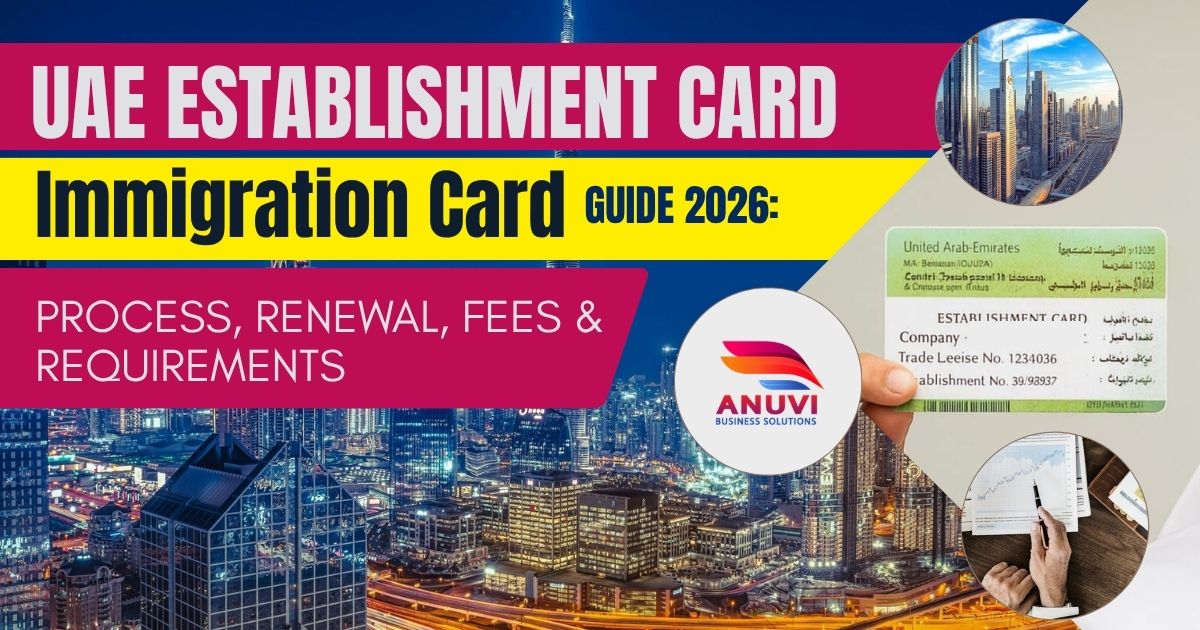
An Establishment Card, also called an Immigration Card, registers the company with the relevant immigration authority. It is generally required before the company can sponsor investor, partner or employee visas.
Mainland companies normally process immigration registration through the relevant Dubai immigration channel. Free-zone companies usually apply through their free-zone authority.
Mainland companies intending to hire employees may need to open a Ministry of Human Resources and Emiratisation labour file and obtain an approved employee quota.
The authority may review the office, business activity, company structure and proposed job roles. Free-zone companies follow their respective authority’s employment and quota procedures.
Before hiring anyone, confirm the permitted job title, work permit requirements, employment contract and Wage Protection System obligations.
5. Apply for Investor and Employee Visas
Once the immigration and labour requirements are active, the company can begin eligible visa applications.
Depending on the applicant, the process may involve:
A trade license allows you to apply for corporate banking, but it does not guarantee approval.
Banks may examine the company’s activities, shareholder backgrounds, source of funds, expected transactions, office arrangements and target markets. Prepare a strong compliance file containing:
Do not assume that a new, free-zone or loss-making company can ignore Corporate Tax.
UAE resident juridical persons established on or after 1 March 2024 generally must apply for Corporate Tax registration within three months of incorporation, establishment or recognition.
Registration is completed through EmaraTax. The FTA currently provides Corporate Tax registration free of charge.
Even if the company expects a 0% rate or has no immediate revenue, its registration and filing obligations must be assessed separately.
8. Assess Your VAT Registration Requirement
VAT registration is not automatically required when a trade license is issued. It depends mainly on taxable supplies and imports.
For UAE-resident businesses:
Mandatory registration threshold: AED 375,000
Voluntary registration threshold: AED 187,500
Mandatory registration applies when taxable supplies and imports exceed AED 375,000 during the previous 12 months or are expected to exceed it within the next 30 days, according to the Federal Tax Authority’s VAT rules.
Monitor turnover monthly instead of waiting until year-end.
9. Establish Accounting and Invoicing Systems
Start bookkeeping from the company’s first transaction—not when the first tax return becomes due.
Businesses should also assess whether customs registration, AML obligations, beneficial-owner updates or sector-specific reporting applies to them.
10. Create a Compliance and Renewal Calendar
Missing a deadline can interrupt banking, visa processing or business operations.
Track the expiry or filing dates for:
Trade license
Lease or Ejari
Establishment Card
Employee and investor visas
Work permits
Corporate Tax returns
VAT returns
Insurance policies
Regulatory approvals
Bank KYC updates
Set reminders at least 30 to 60 days before renewals. Never rely entirely on authority notifications.
Frequently Asked Questions
Can I start operating immediately after receiving a Dubai trade license?
You can operate only within your approved activities and after completing any required premises, immigration, labour or external regulatory approvals.
Is an Establishment Card mandatory after getting a Dubai trade license?
It is generally required if the company intends to sponsor investor, partner or employee visas. Requirements vary by jurisdiction and company package.
Must every new Dubai company register for Corporate Tax?
Most UAE juridical persons subject to Corporate Tax must register, including qualifying free-zone entities. A 0% tax rate or no revenue does not automatically remove the registration obligation.
Do I need to register for VAT immediately?
Not necessarily. VAT registration depends on taxable turnover, imports, expenses and whether mandatory or voluntary registration conditions are met.
Can a bank reject my company after the trade license is issued?
Yes. Banks conduct independent compliance and commercial assessments. A valid trade license does not guarantee account approval.
Need Help After Getting a Dubai Trade License?
Anuvi Business Solutions can assist with Establishment Cards, investor and employee visas, labour registration, corporate bank account applications, Corporate Tax, VAT and ongoing business compliance.
Disclaimer: This article provides general information and does not constitute legal or tax advice. Requirements depend on the company’s jurisdiction, activities and circumstances and may change.
Please share your valuable inputs